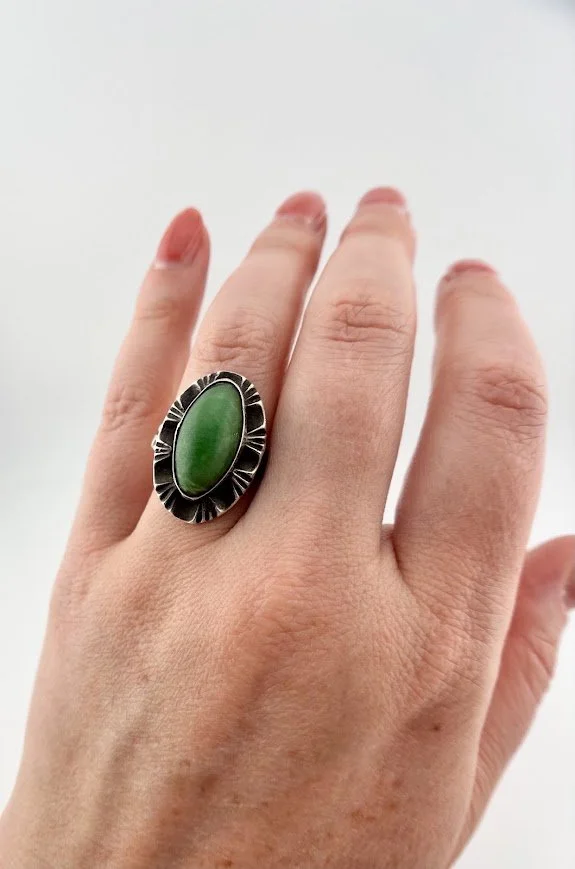
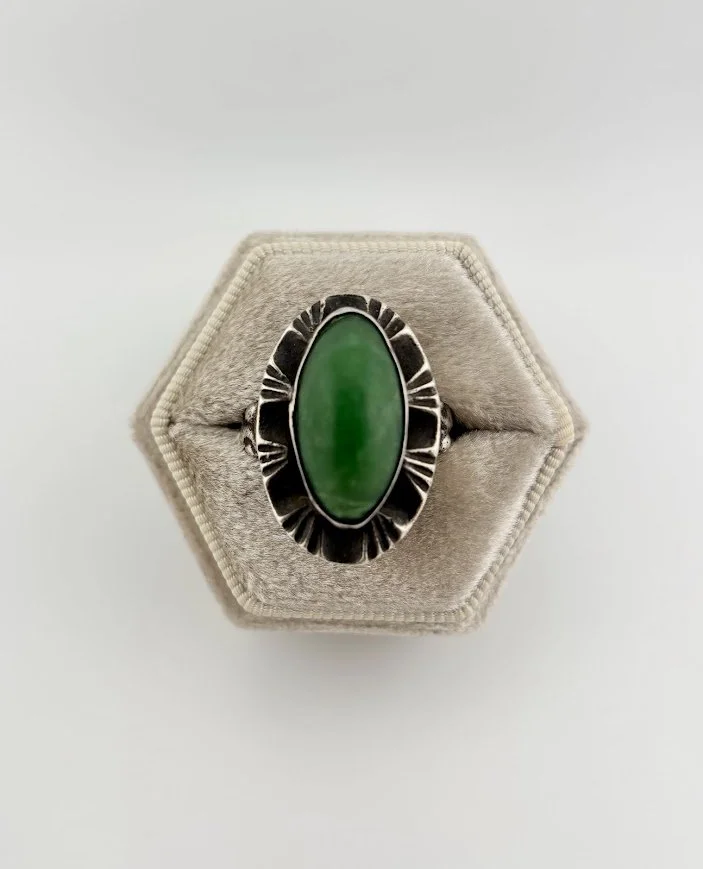
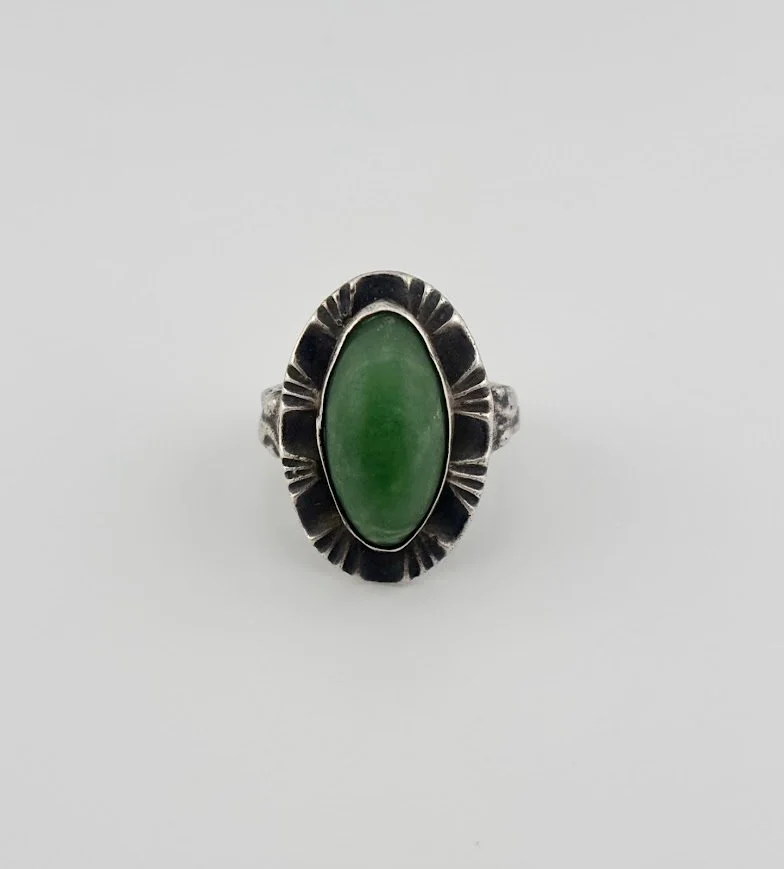
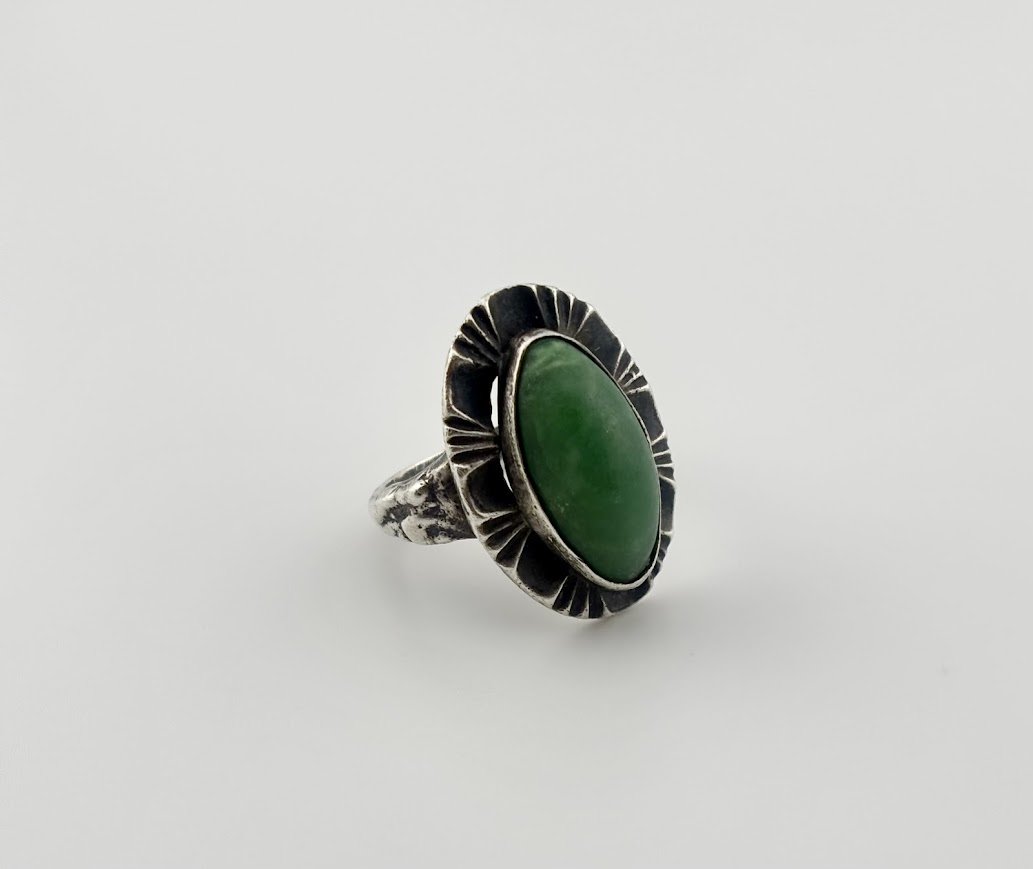
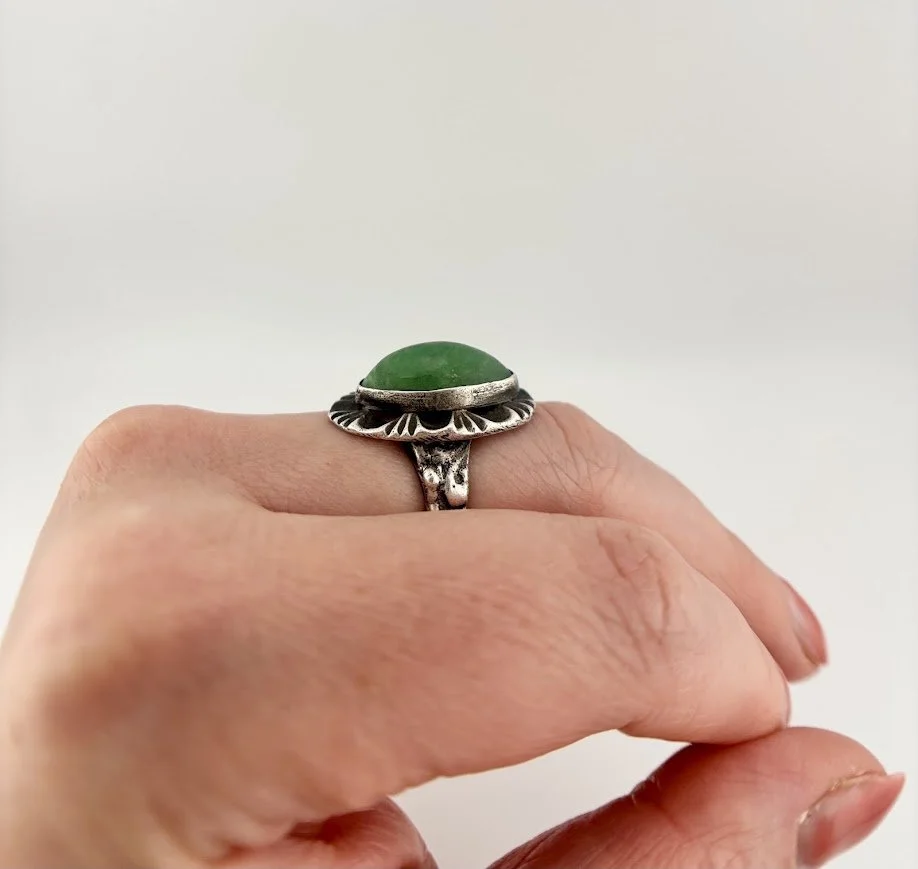
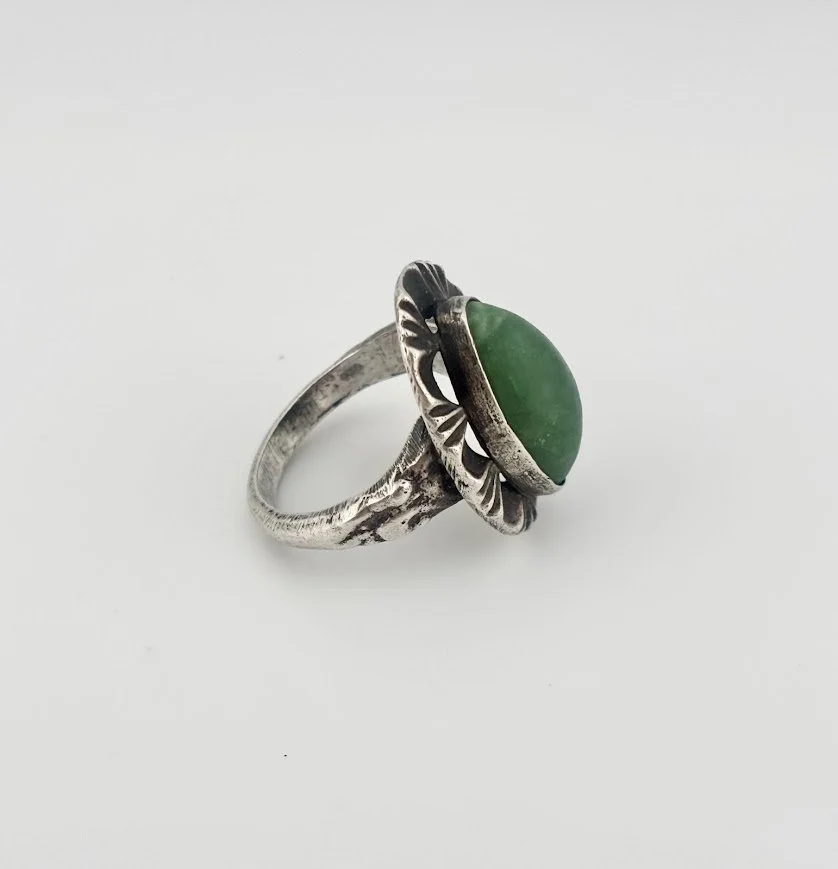
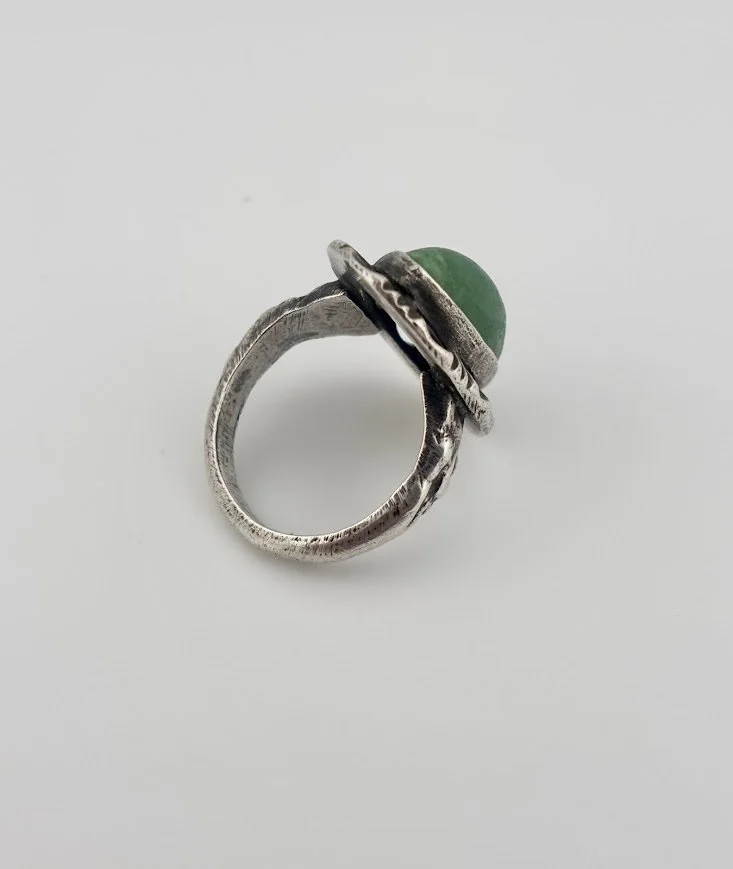
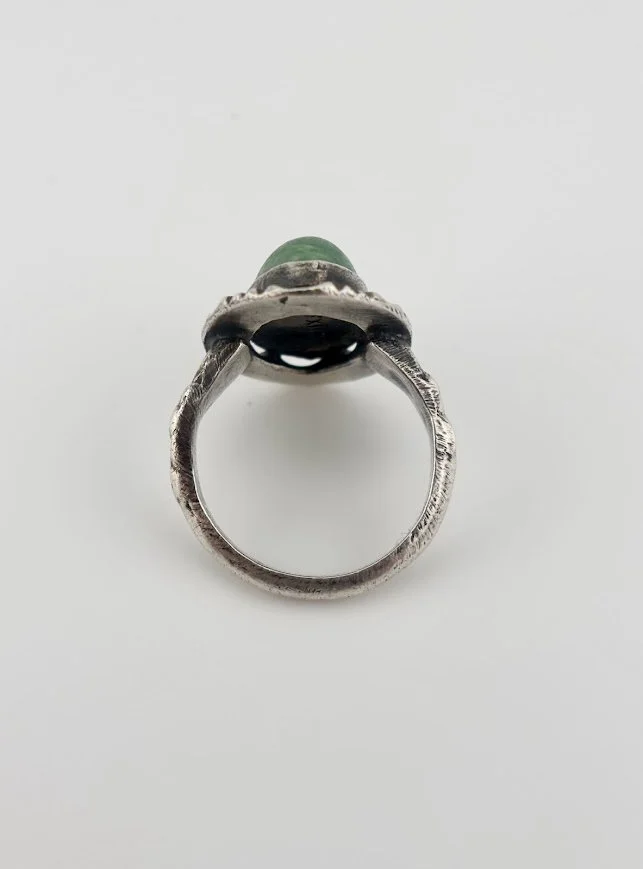
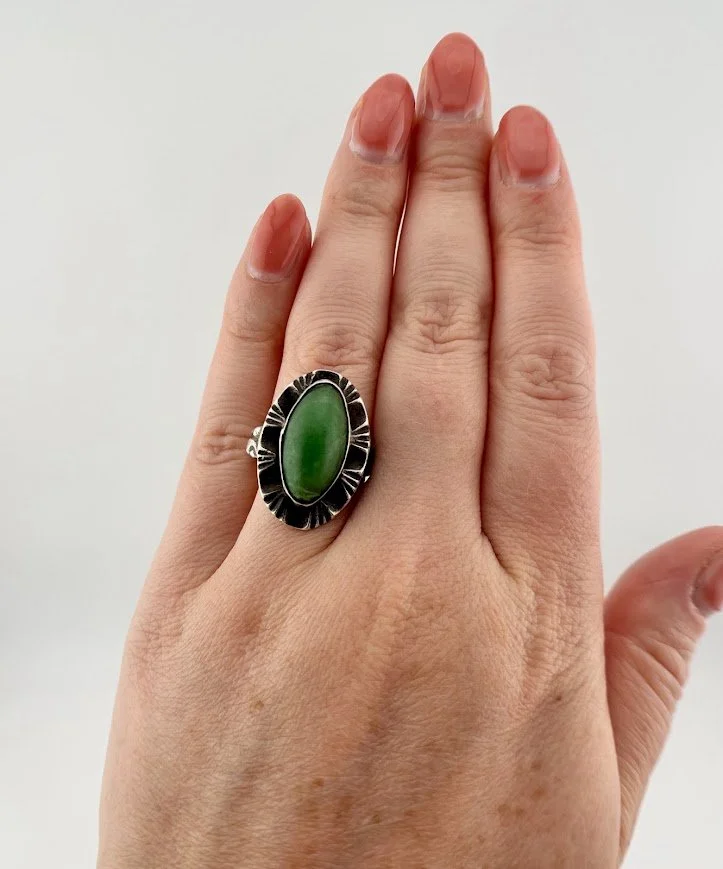
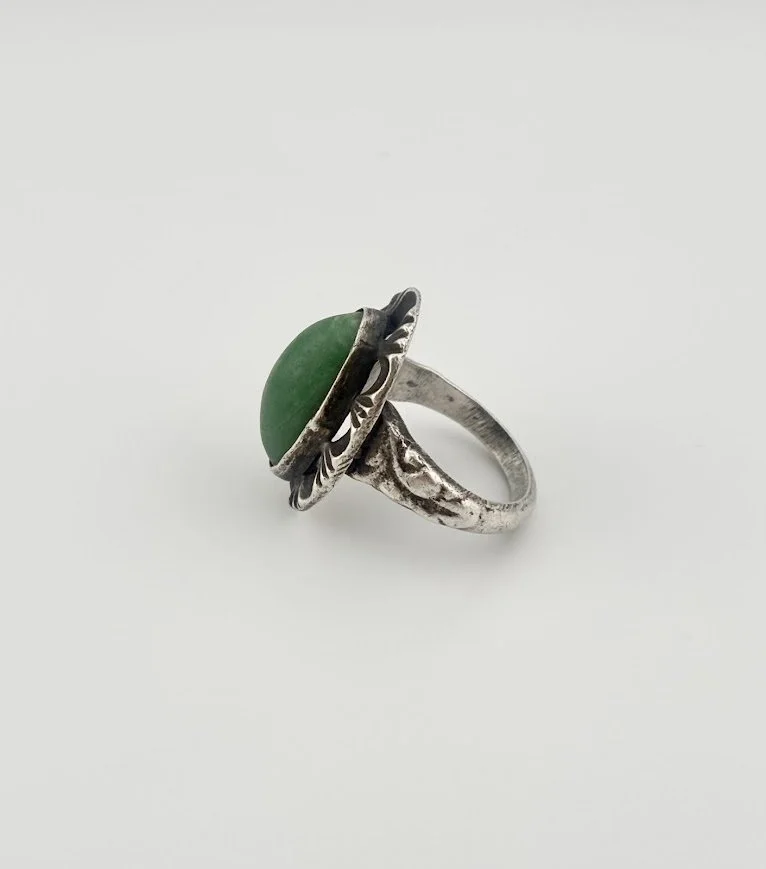
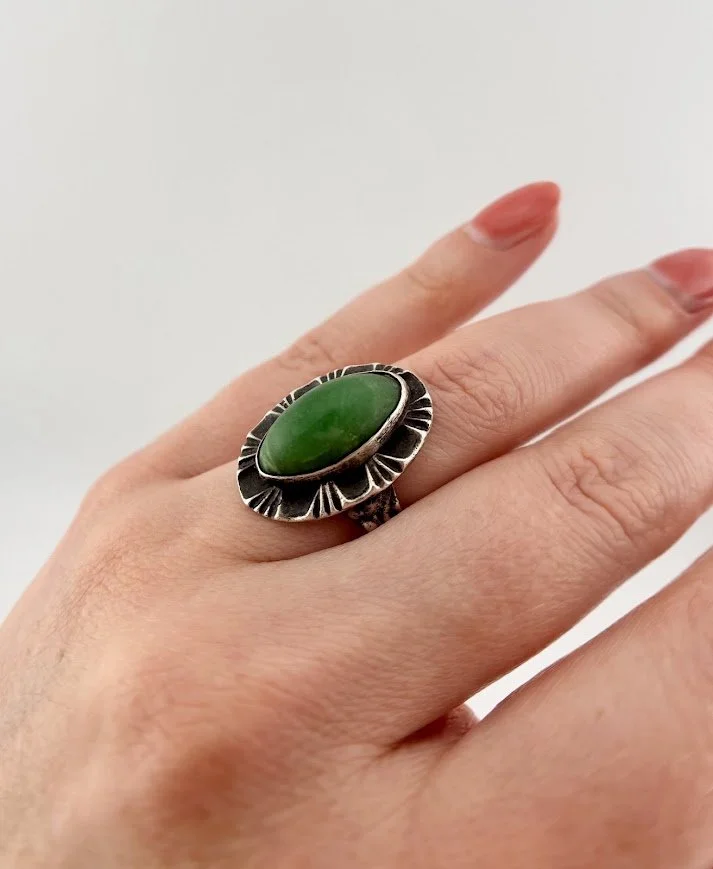
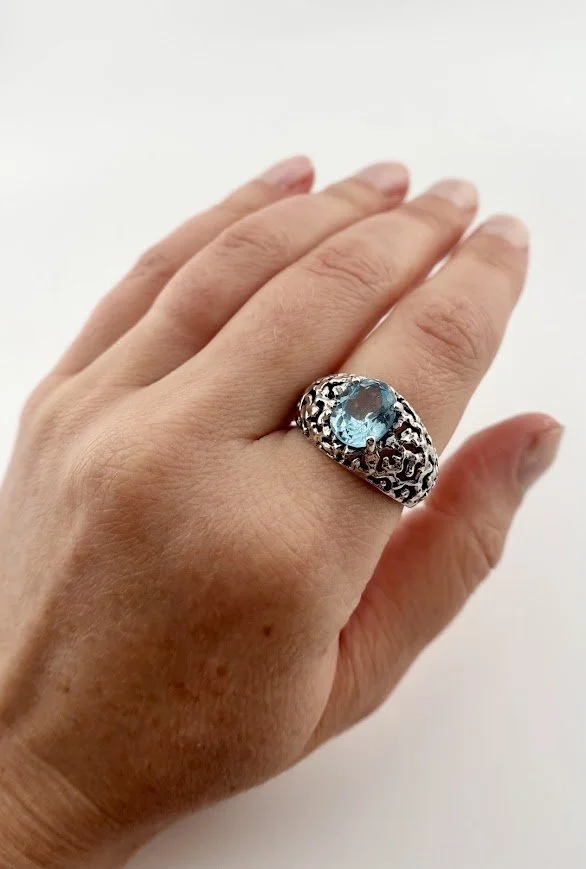
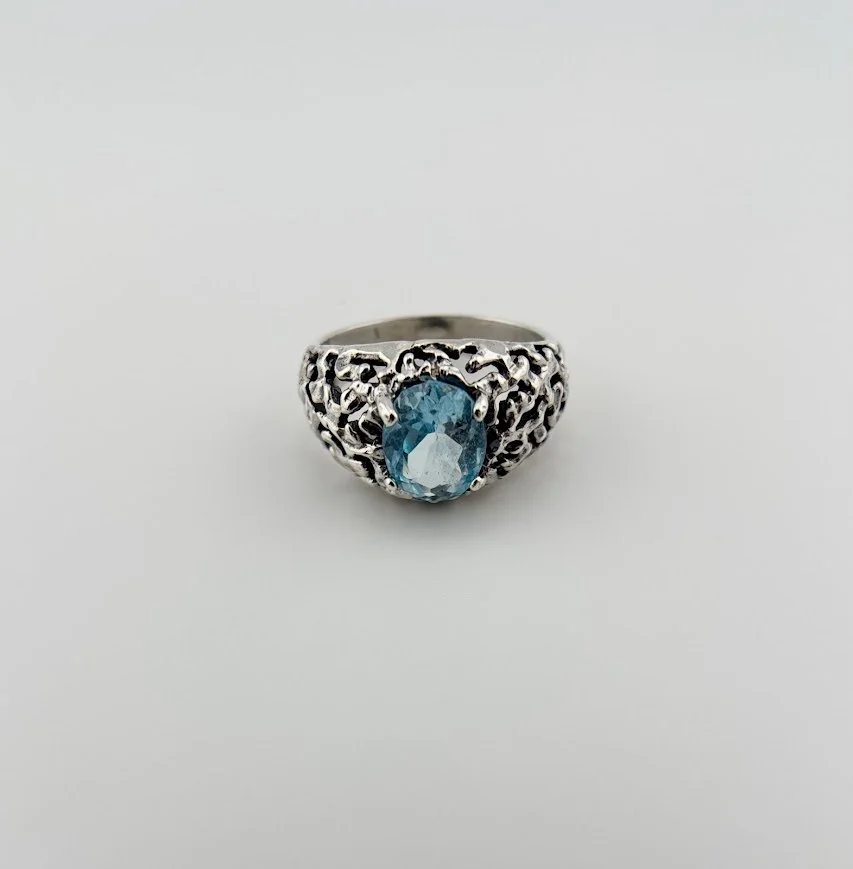
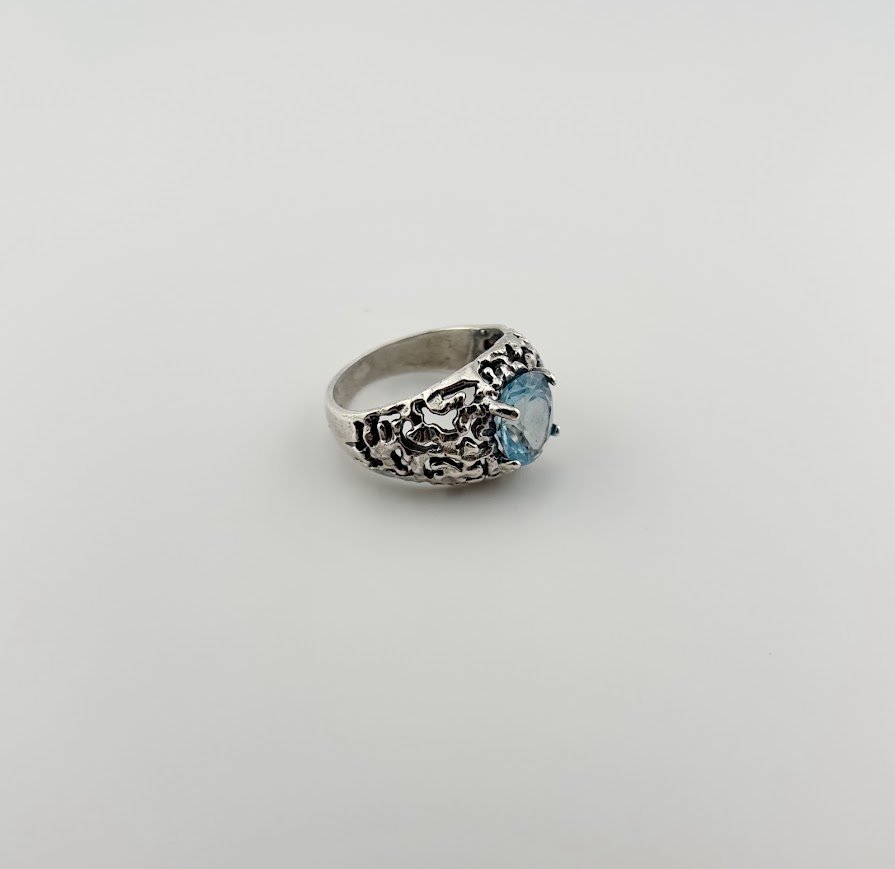
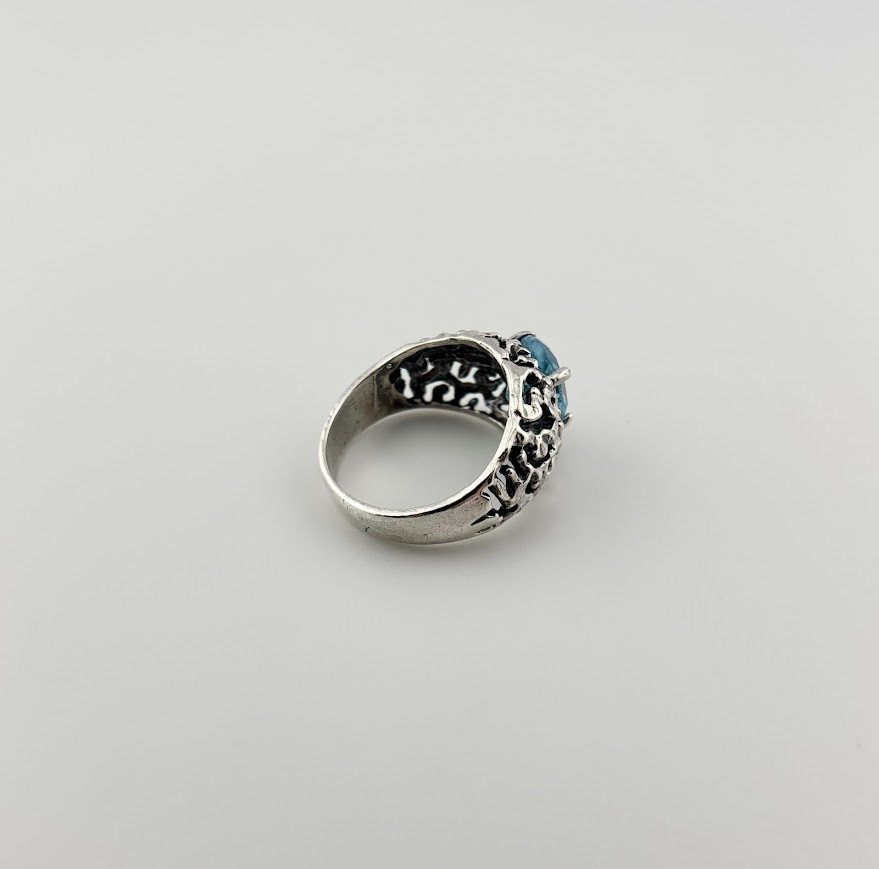
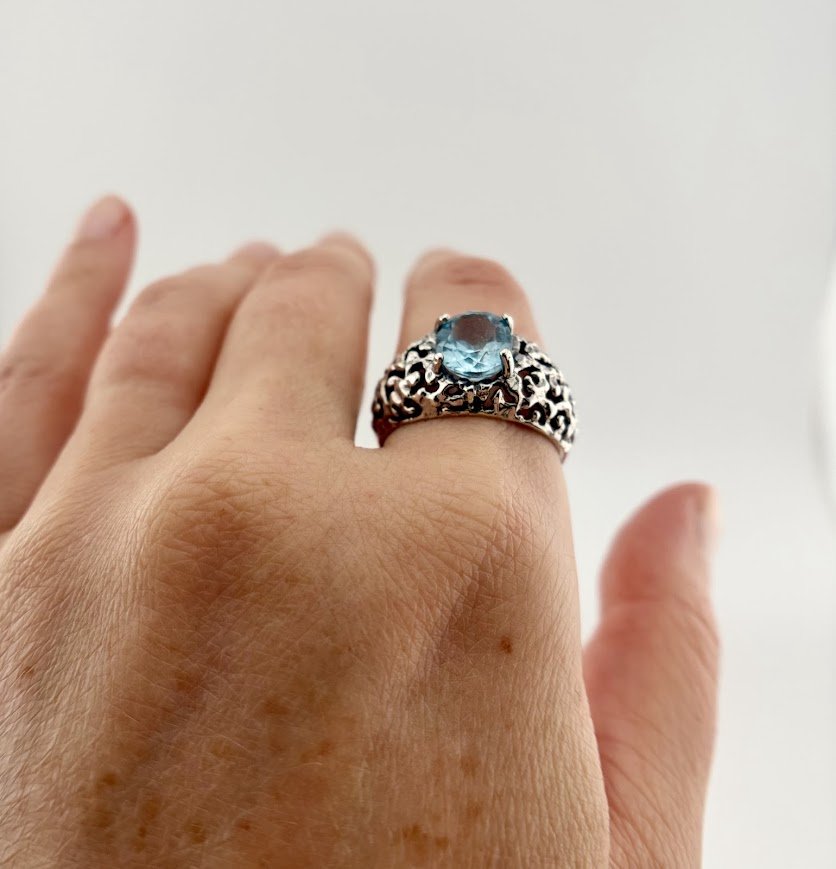
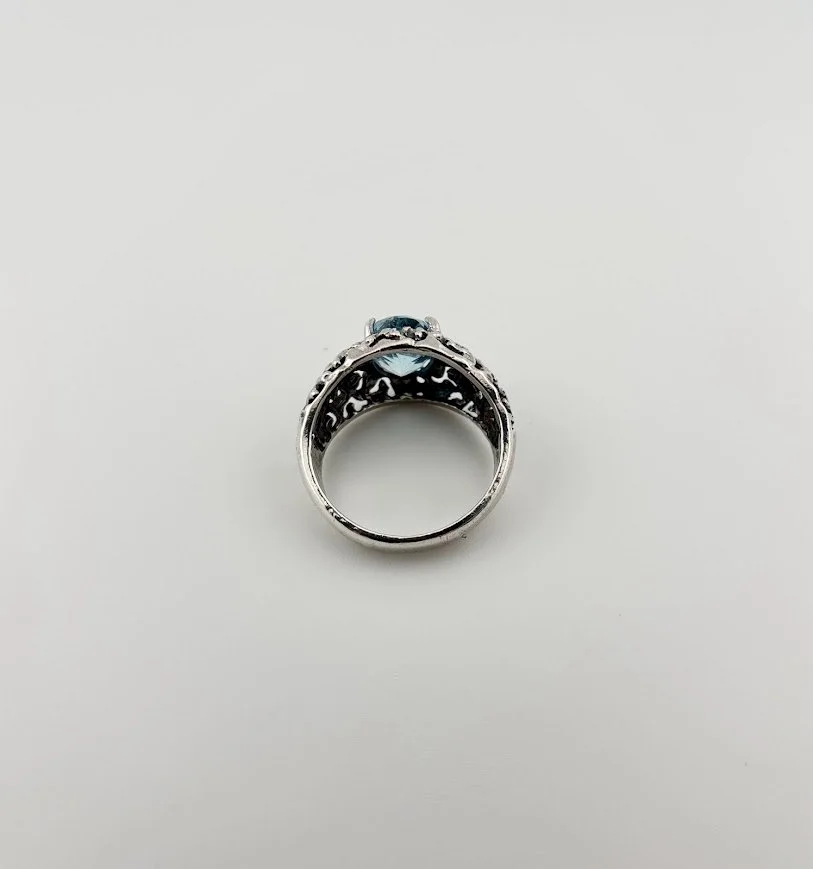
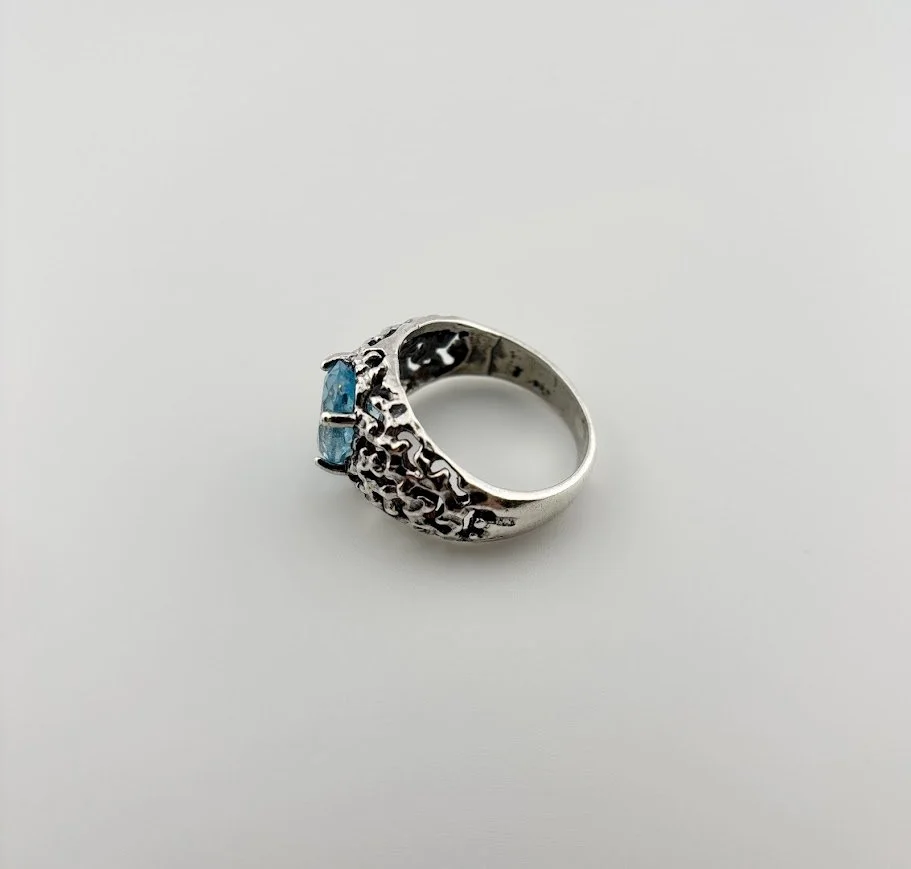
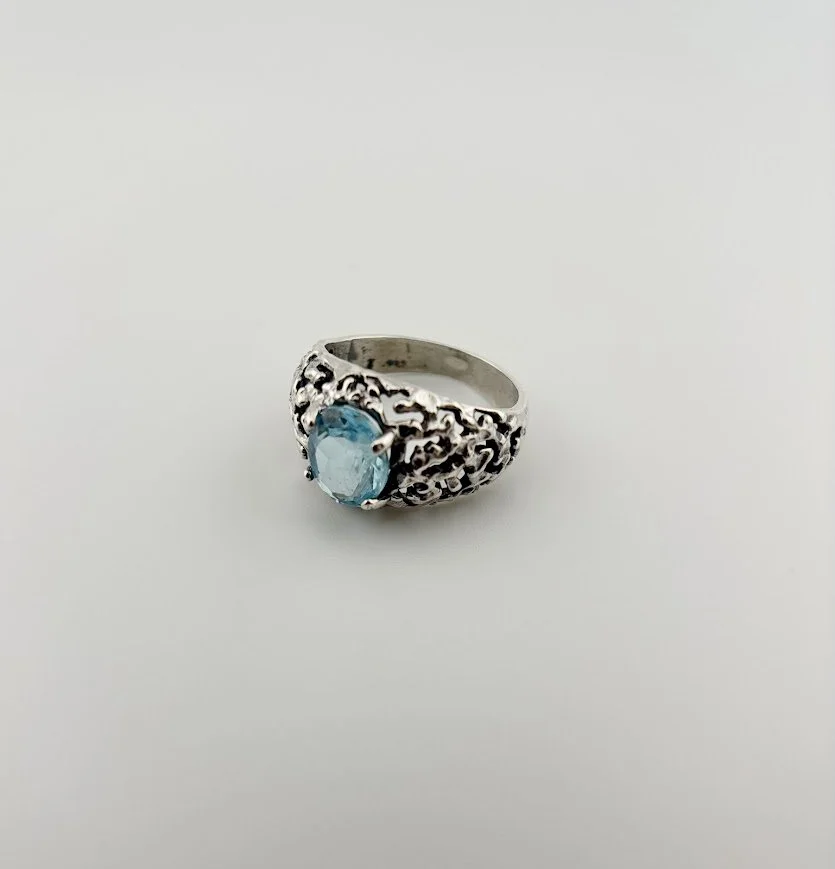
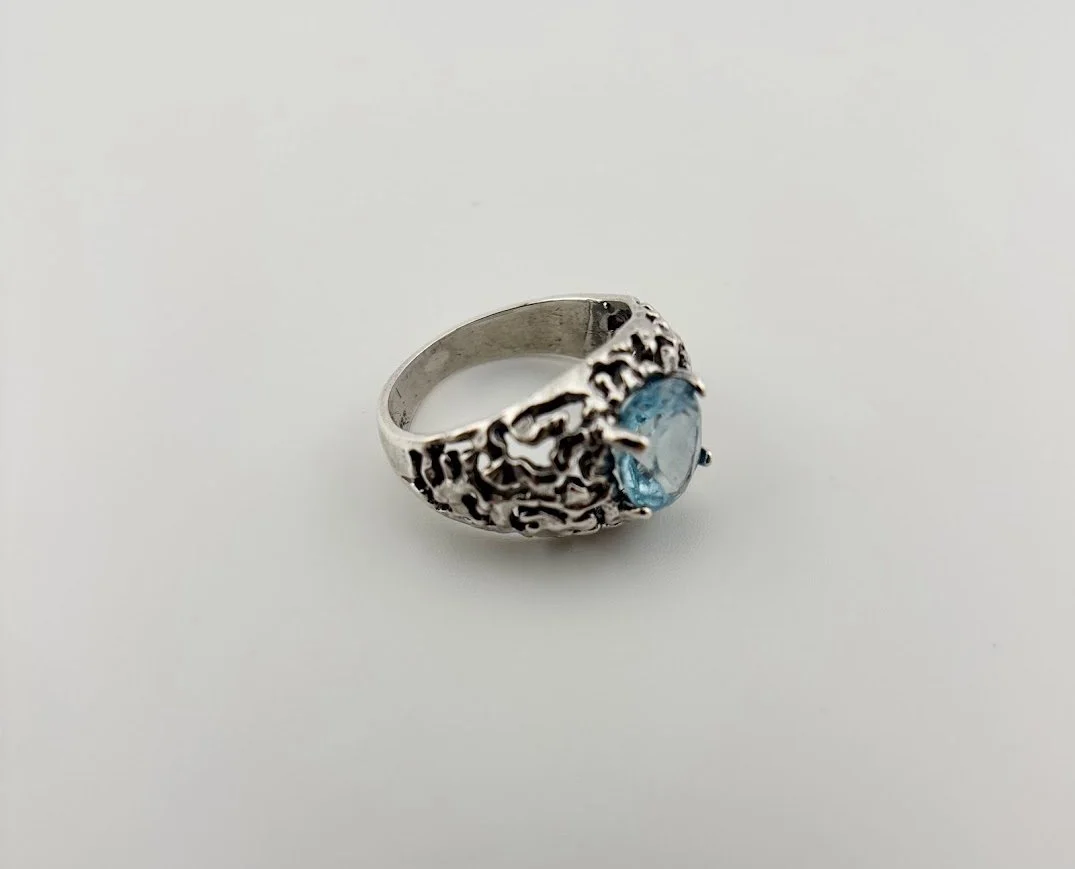
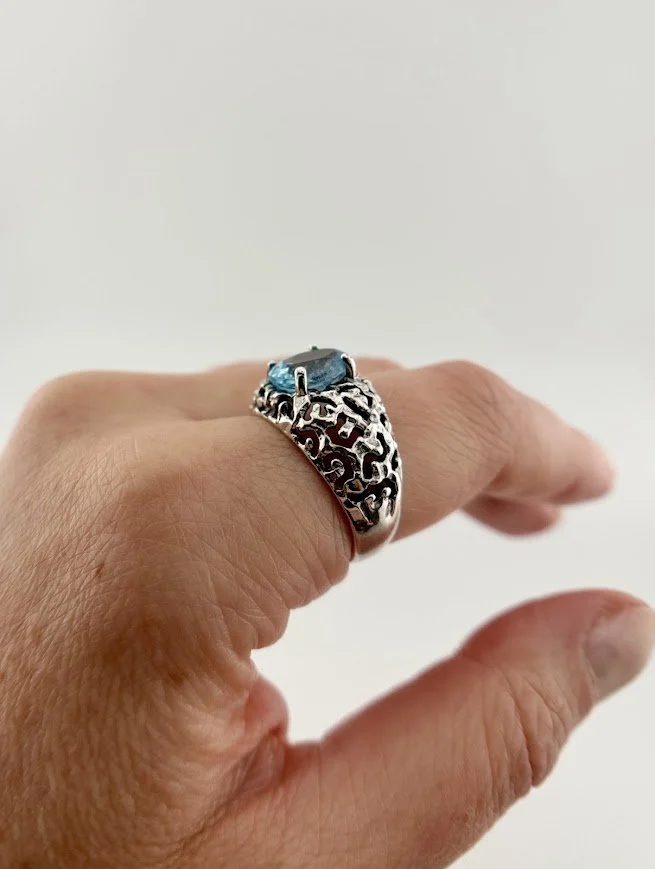
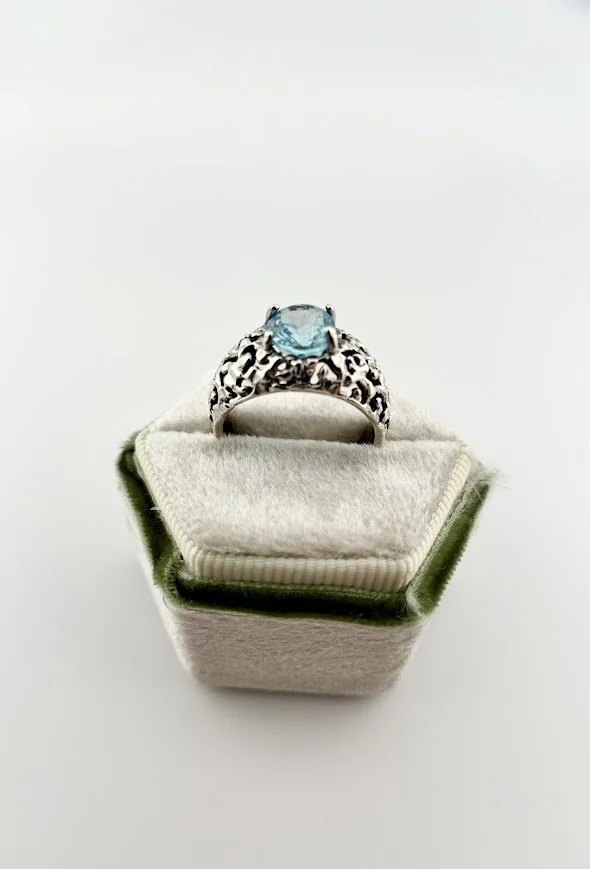
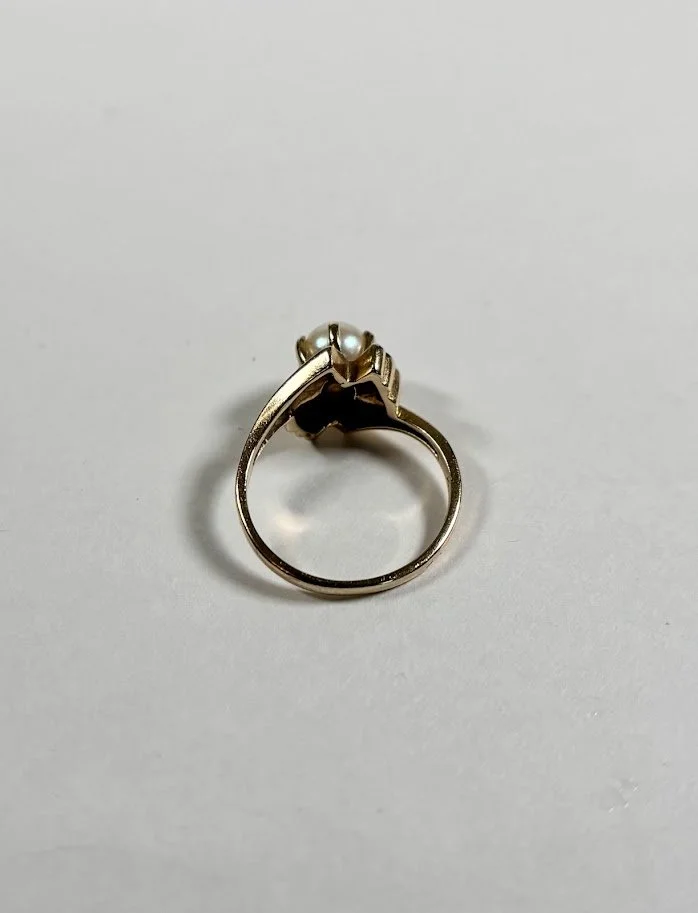
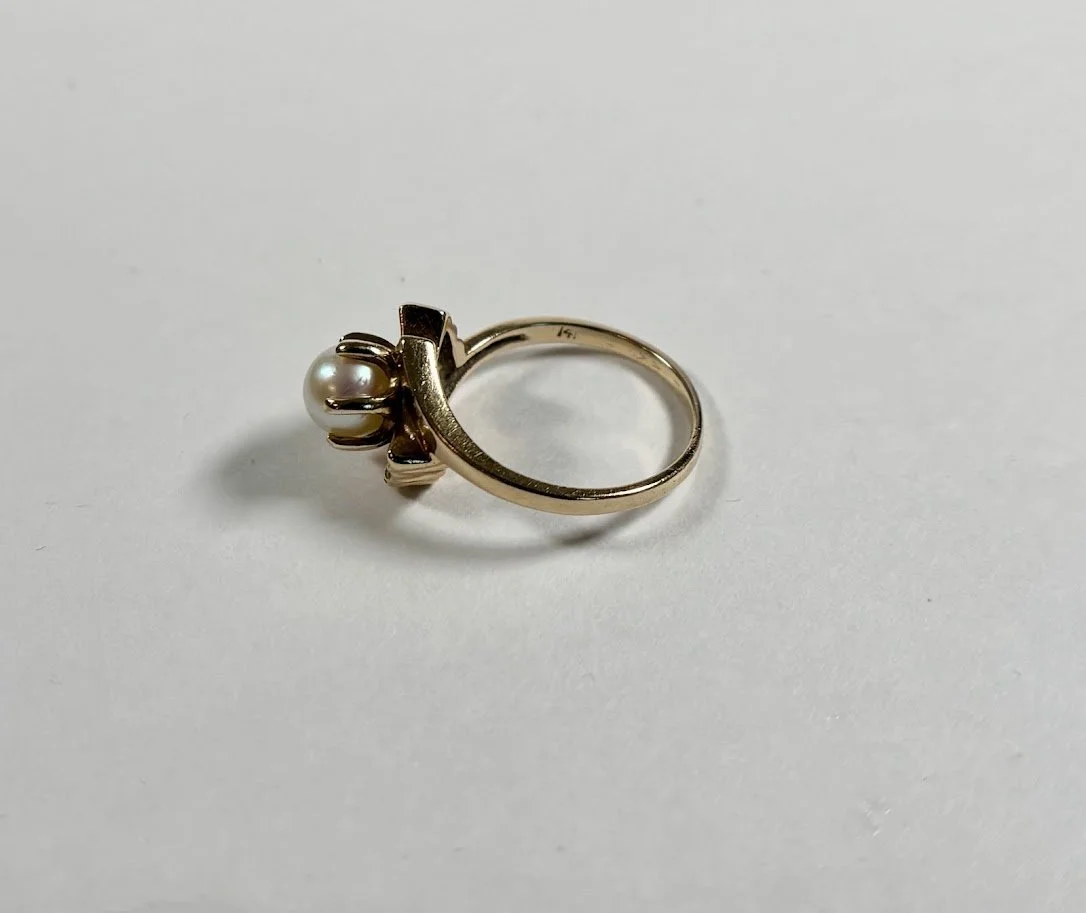
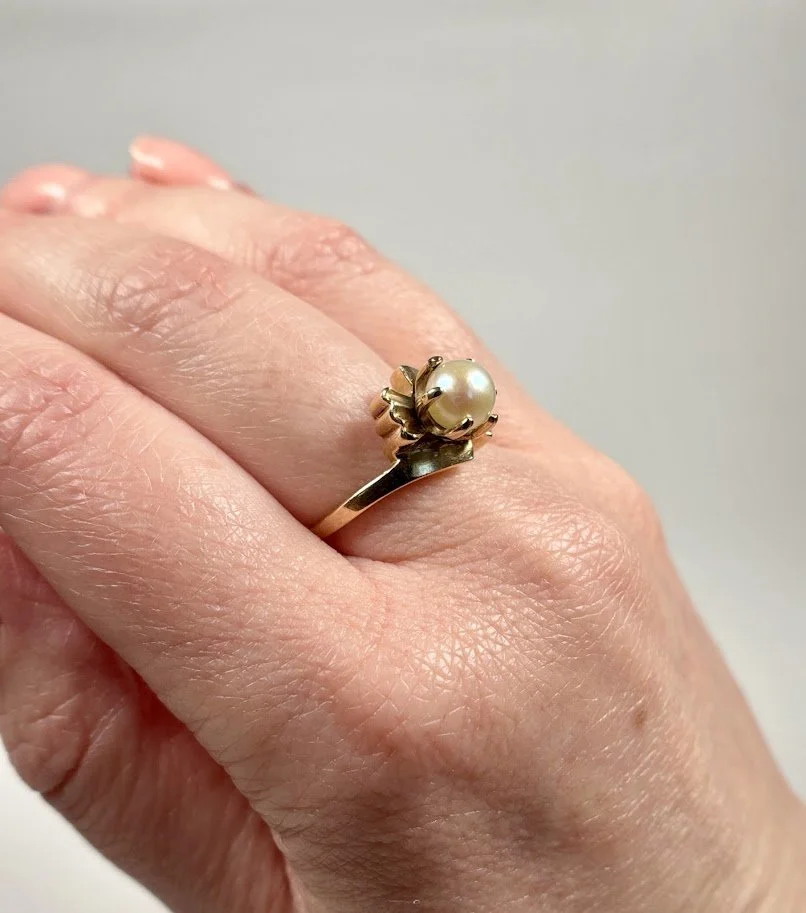
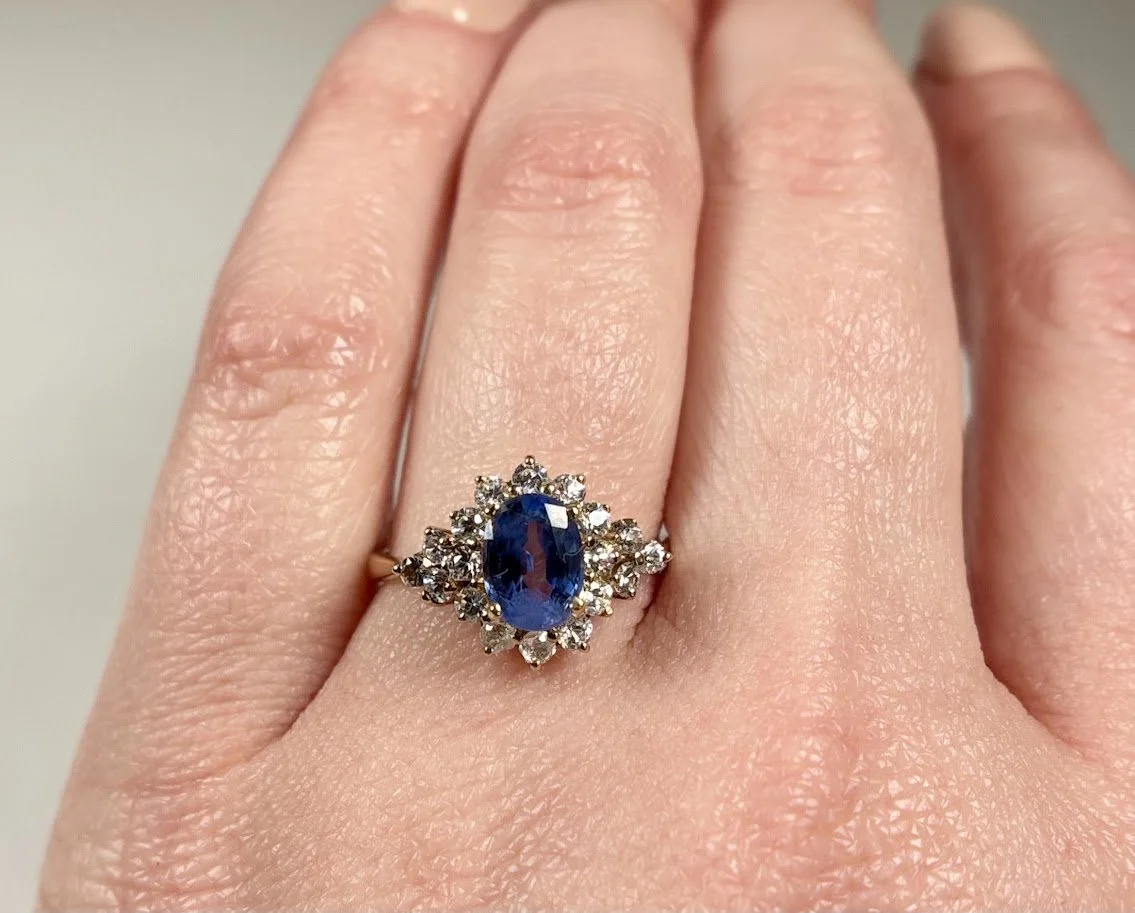
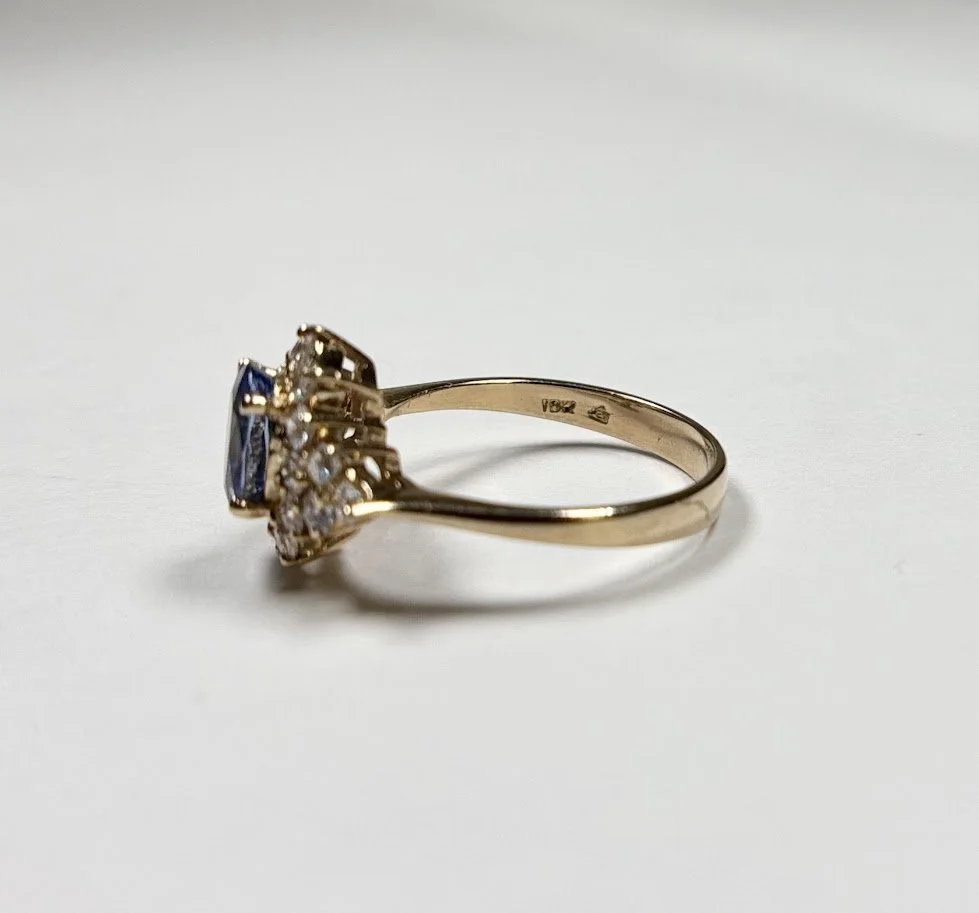
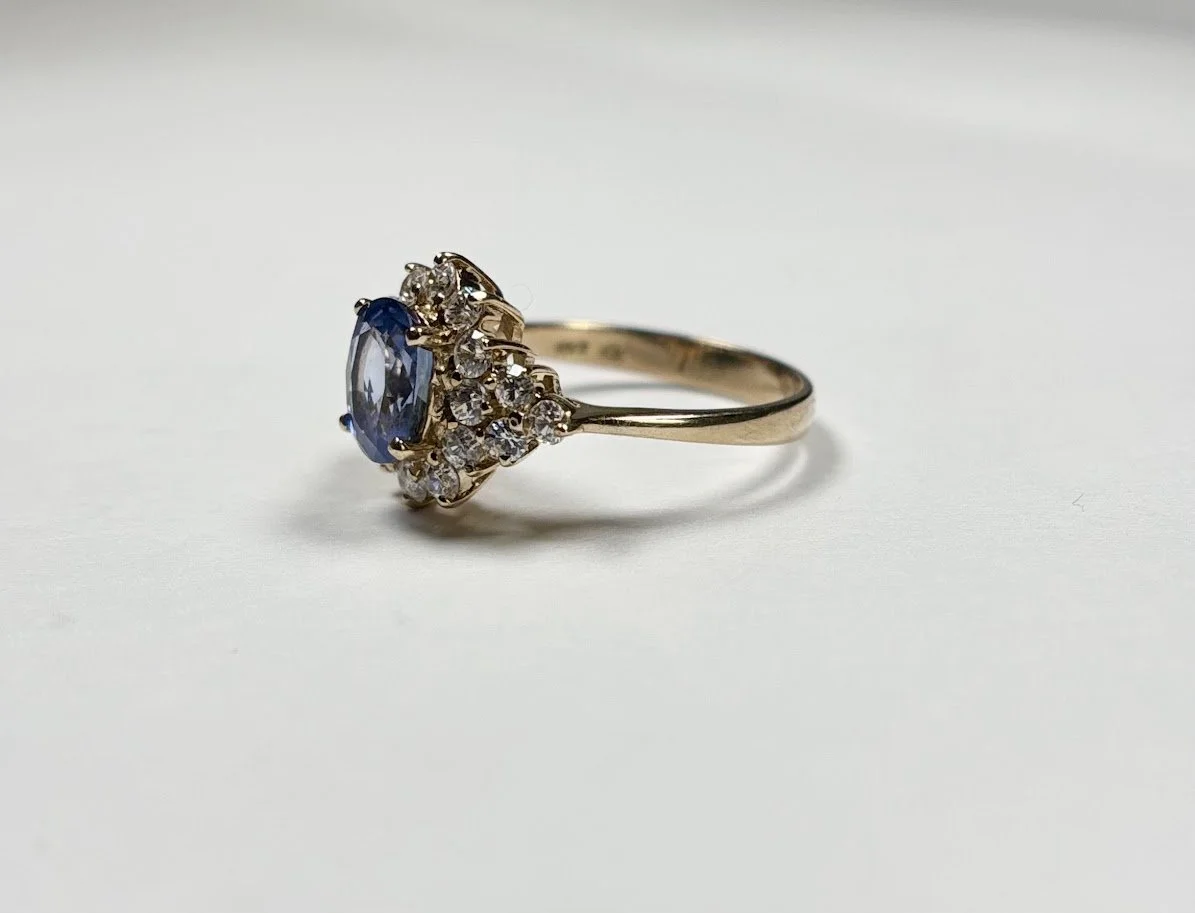
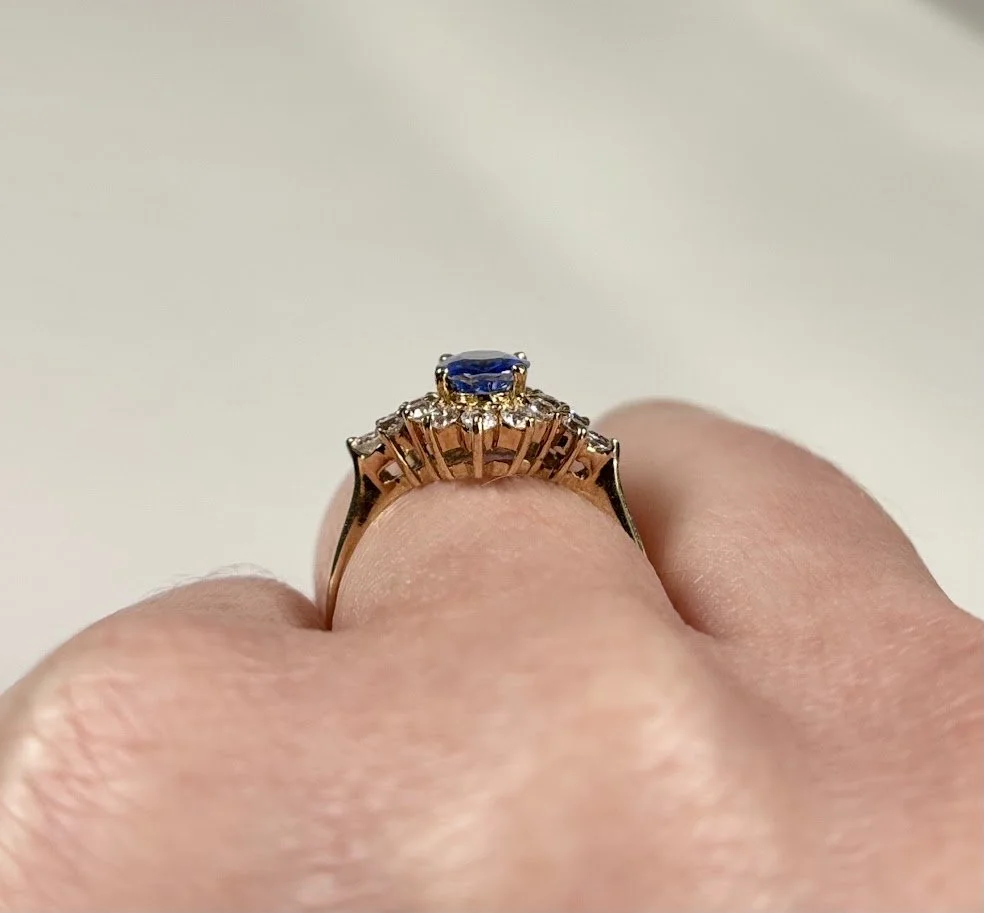
This bold Art Deco onyx and diamond ring from the late 1920s - early 1930s is defined by contrast, geometry, and proportion. The elongated rectangular onyx is precisely cut and etched with crisp linear corner motifs, a subtle but striking detail that adds depth and graphic interest to the stone’s polished surface. At its center, a single old style cut diamond is set in a geometric white gold bezel. The shoulders feature delicate pierced openwork and fine milgrain detail.
Every detail of this ring reflects the Art Deco era’s focus on balance and proportion, resulting in a design that feels bold yet easy to wear. Nearly a century old, and this ring still feels remarkably modern.
*Note on Condition: Recently professionally serviced, by a jeweler that specializes in antique estate jewelry. The onyx tablet and diamond have been securely reset and the structure reinforced. Well preserved Art Deco rings of this caliber are becoming increasingly scarce, particularly in larger, more wearable sizes. Examples retaining crisp etched detailing, unabraded onyx, and solid construction are not easily found. This is a fantastic collectors piece that is also ready to be worn confidently for another 100 years.
-Details-
Size: 7 3/4 US, P UK
Dimensions: 3.60mm - 2.00mm tapered shank, rises 5.00mm above finger
Metal: 14k white gold
Primary Stone: Black onyx tablet, 19.40mm x 8.20mm
Secondary Stone: Diamond, old single-cut, ~1.60mm
Total Weight: 3.86 grams
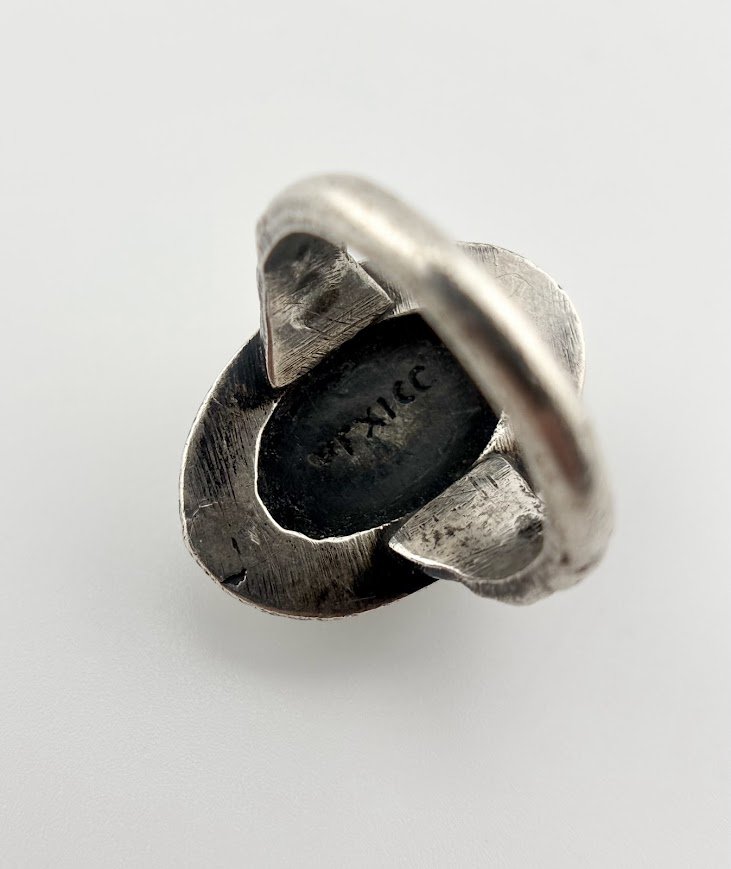
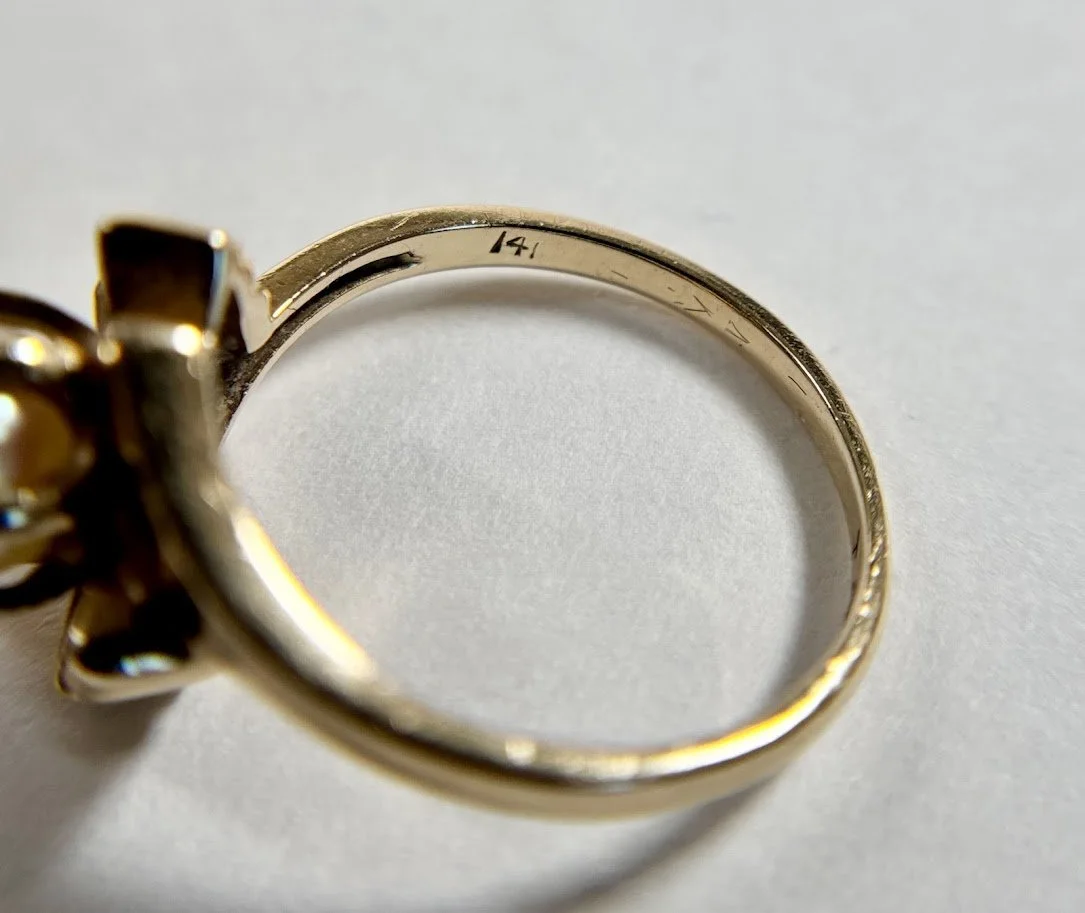
Hallmark: 14K with makers mark
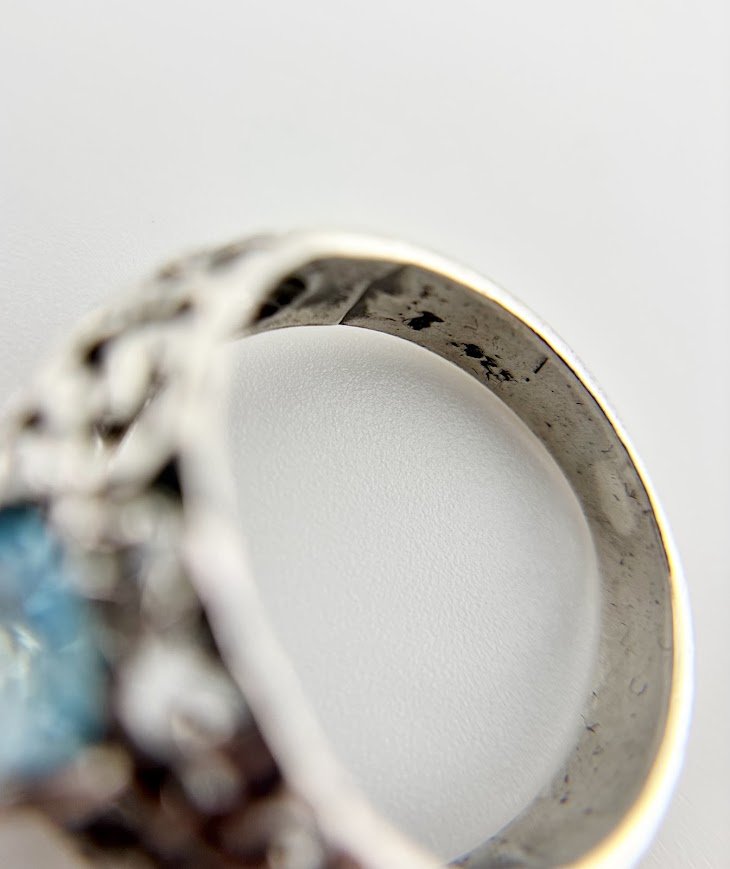
Condition: Very good vintage condition. Band shows evidence of being re-sized.
A Note to Our Customers: All of our vintage or antique pieces have been loved in a previous life. Because of this, you may notice subtle signs of wear consistent with age, a soft patina, or minor surface marks. These pieces have a lived-in character that comes with time. We take great care to photograph and describe each piece as accurately as possible, and will always note anything significant. These small imperfections are part of what makes each piece unique and are a reflection of its history and the life it has already lived.
This bold Art Deco onyx and diamond ring from the late 1920s - early 1930s is defined by contrast, geometry, and proportion. The elongated rectangular onyx is precisely cut and etched with crisp linear corner motifs, a subtle but striking detail that adds depth and graphic interest to the stone’s polished surface. At its center, a single old style cut diamond is set in a geometric white gold bezel. The shoulders feature delicate pierced openwork and fine milgrain detail.
Every detail of this ring reflects the Art Deco era’s focus on balance and proportion, resulting in a design that feels bold yet easy to wear. Nearly a century old, and this ring still feels remarkably modern.
*Note on Condition: Recently professionally serviced, by a jeweler that specializes in antique estate jewelry. The onyx tablet and diamond have been securely reset and the structure reinforced. Well preserved Art Deco rings of this caliber are becoming increasingly scarce, particularly in larger, more wearable sizes. Examples retaining crisp etched detailing, unabraded onyx, and solid construction are not easily found. This is a fantastic collectors piece that is also ready to be worn confidently for another 100 years.
-Details-
Size: 7 3/4 US, P UK
Dimensions: 3.60mm - 2.00mm tapered shank, rises 5.00mm above finger
Metal: 14k white gold
Primary Stone: Black onyx tablet, 19.40mm x 8.20mm
Secondary Stone: Diamond, old single-cut, ~1.60mm
Total Weight: 3.86 grams
Hallmark: 14K with makers mark
Condition: Very good vintage condition. Band shows evidence of being re-sized.
A Note to Our Customers: All of our vintage or antique pieces have been loved in a previous life. Because of this, you may notice subtle signs of wear consistent with age, a soft patina, or minor surface marks. These pieces have a lived-in character that comes with time. We take great care to photograph and describe each piece as accurately as possible, and will always note anything significant. These small imperfections are part of what makes each piece unique and are a reflection of its history and the life it has already lived.


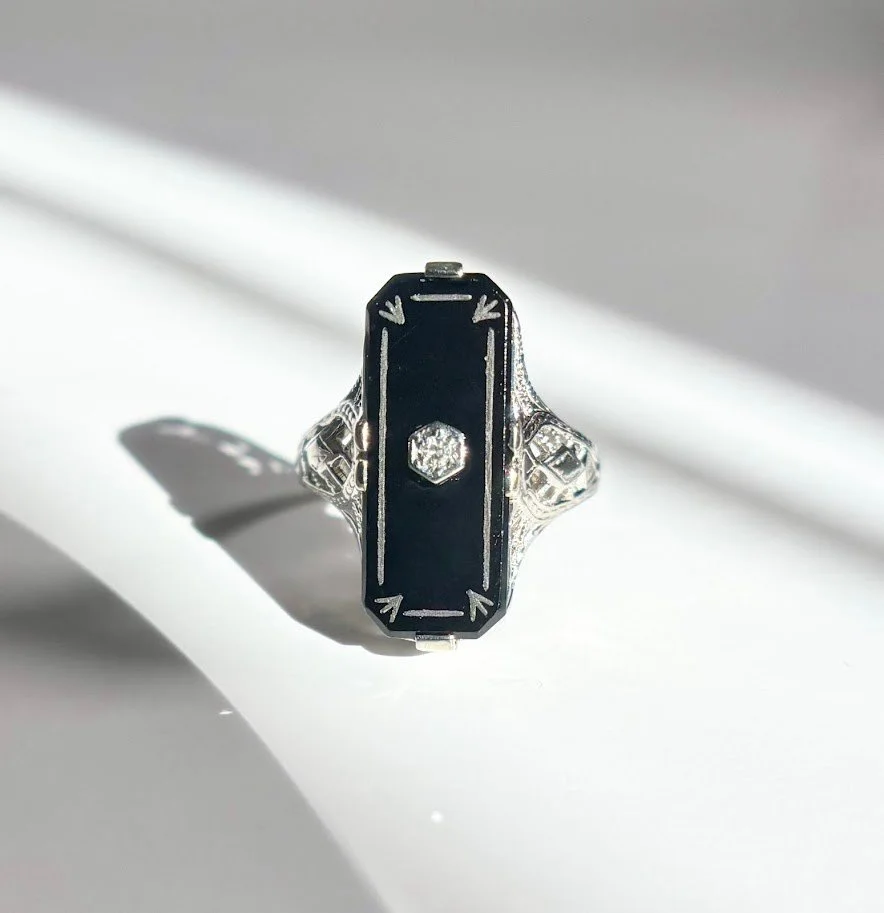 Image 1 of 12
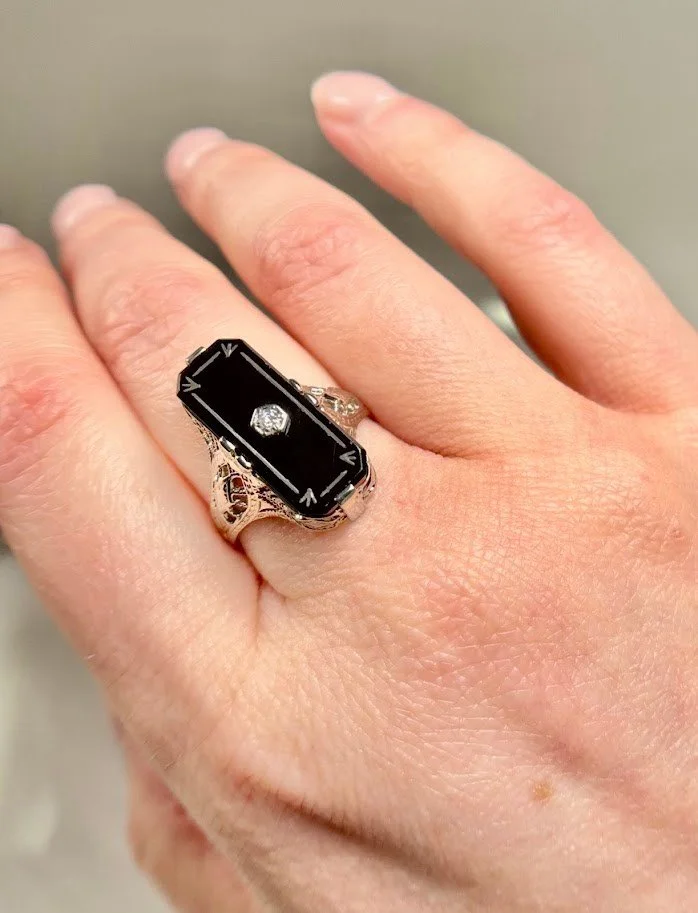 Image 2 of 12
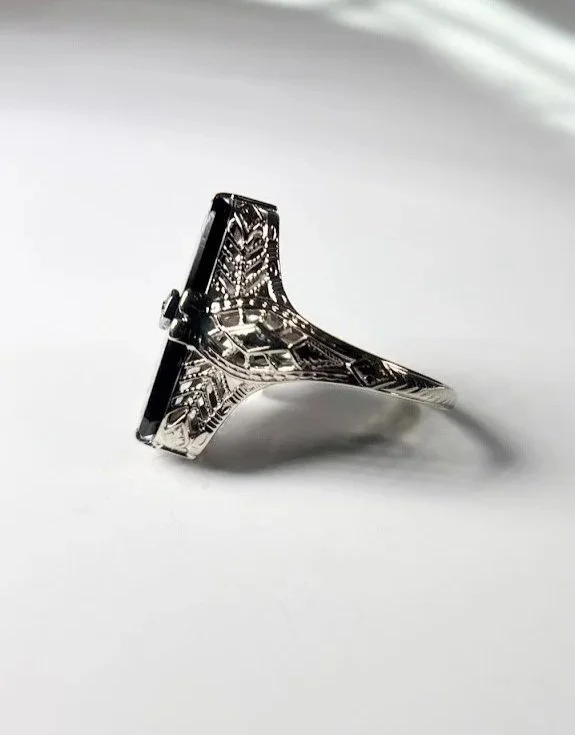 Image 3 of 12
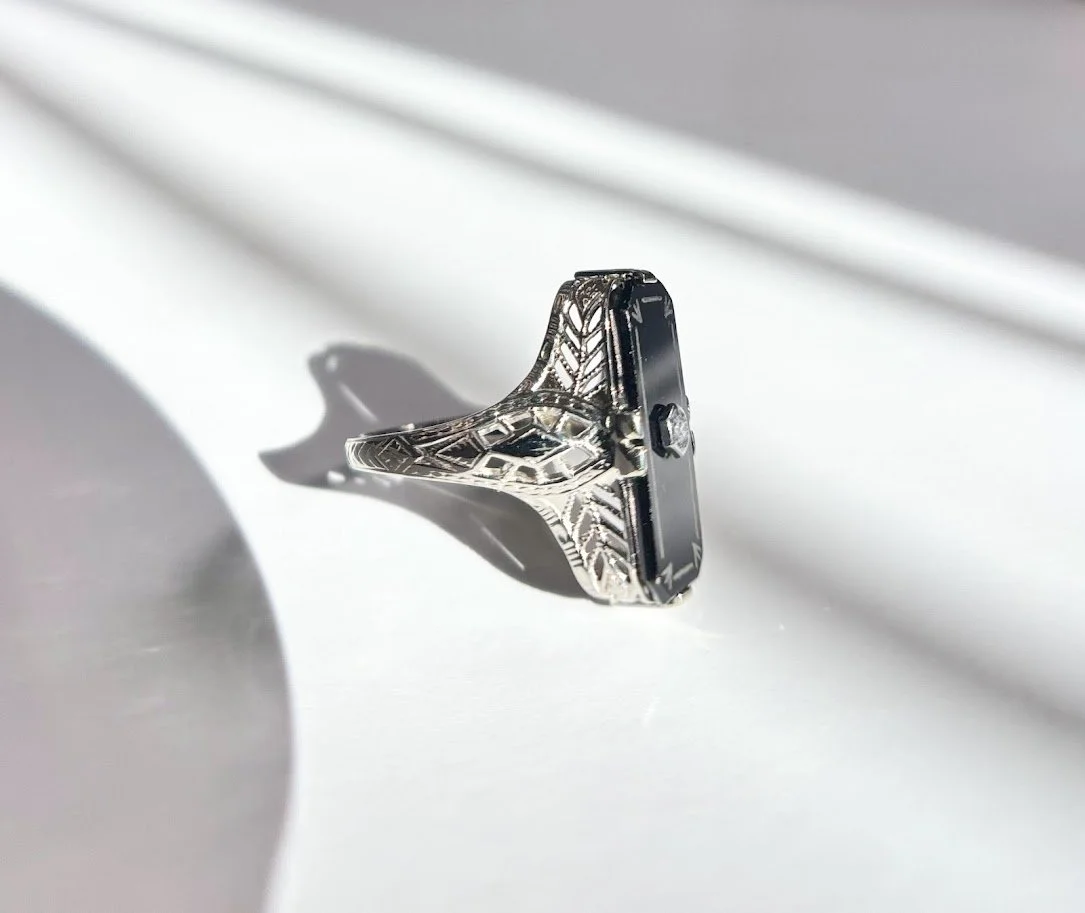 Image 4 of 12
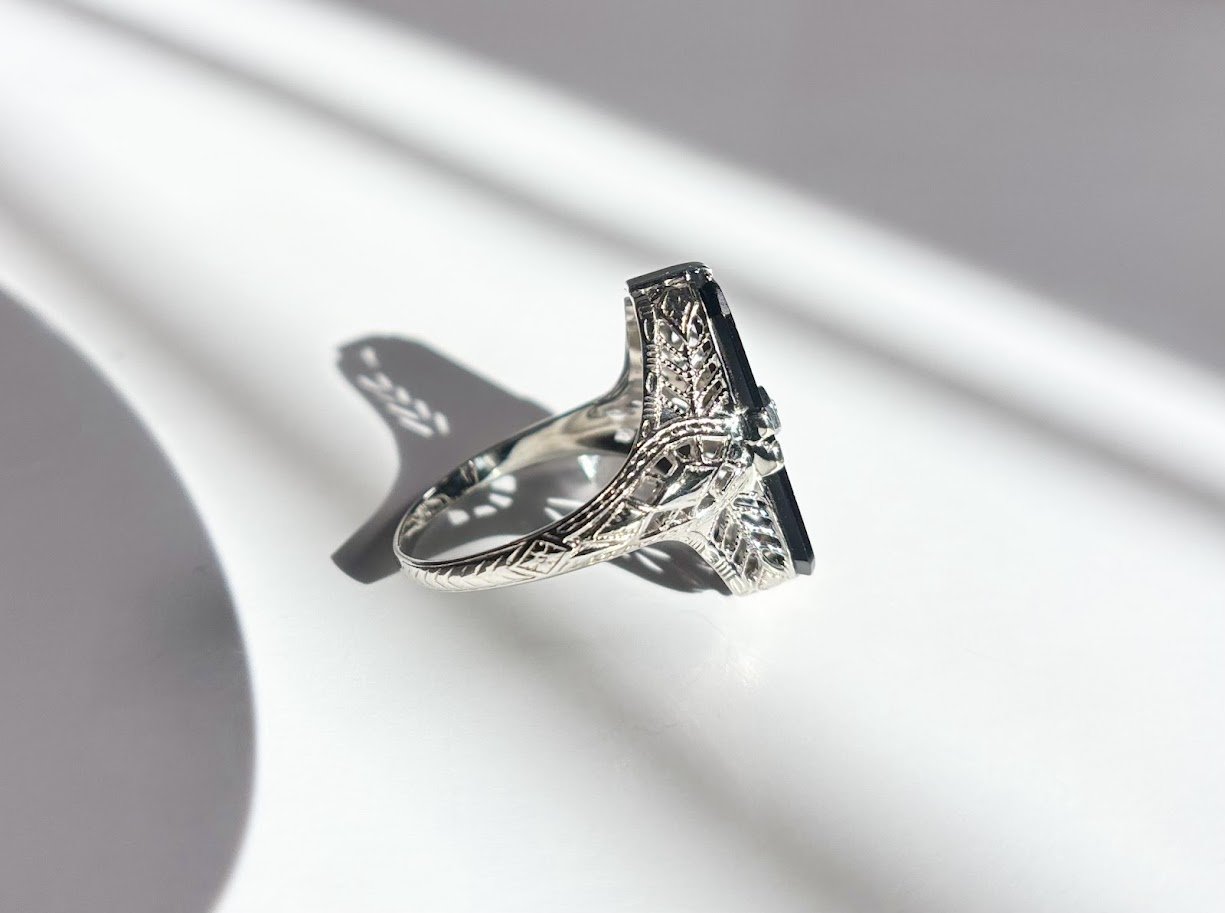 Image 5 of 12
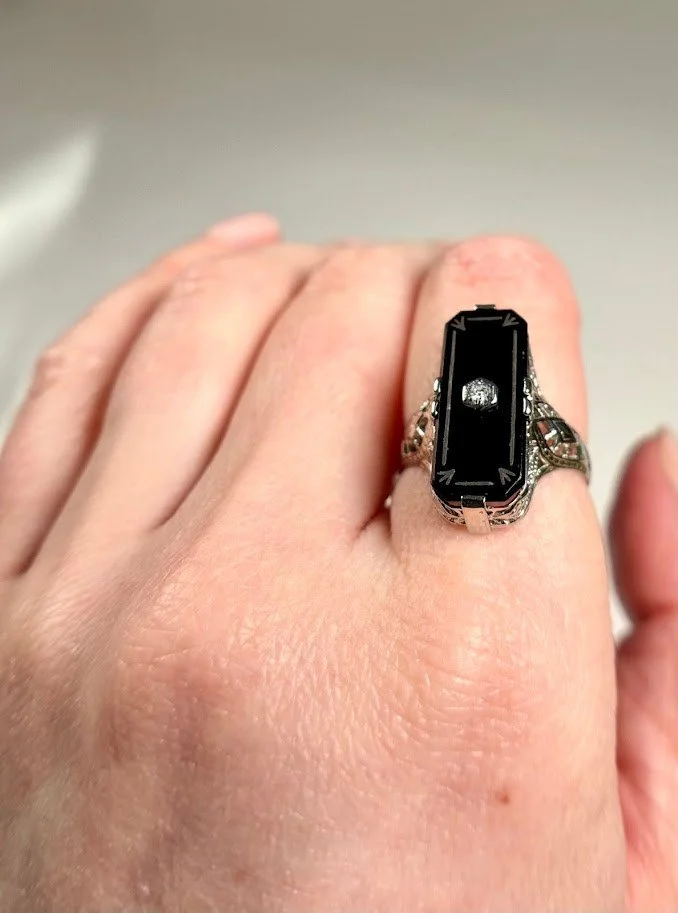 Image 6 of 12
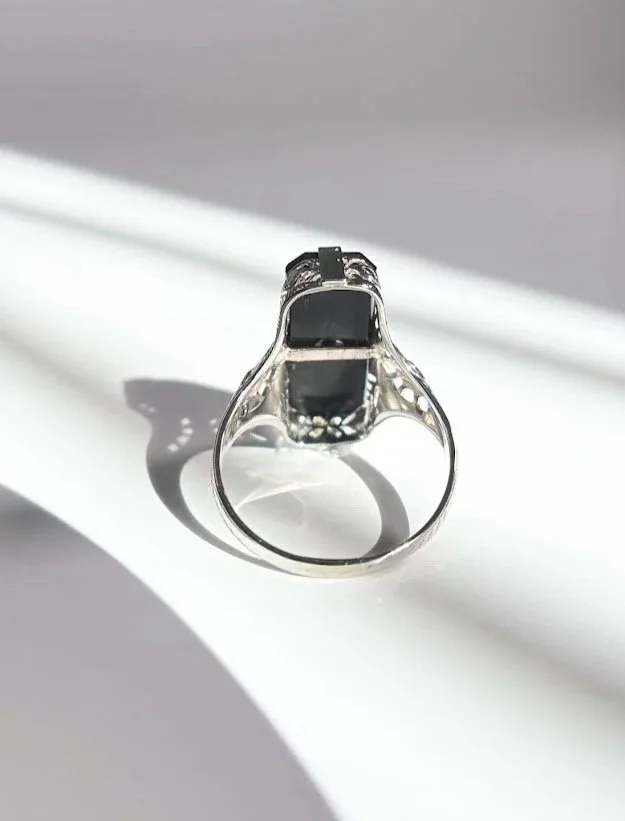 Image 7 of 12
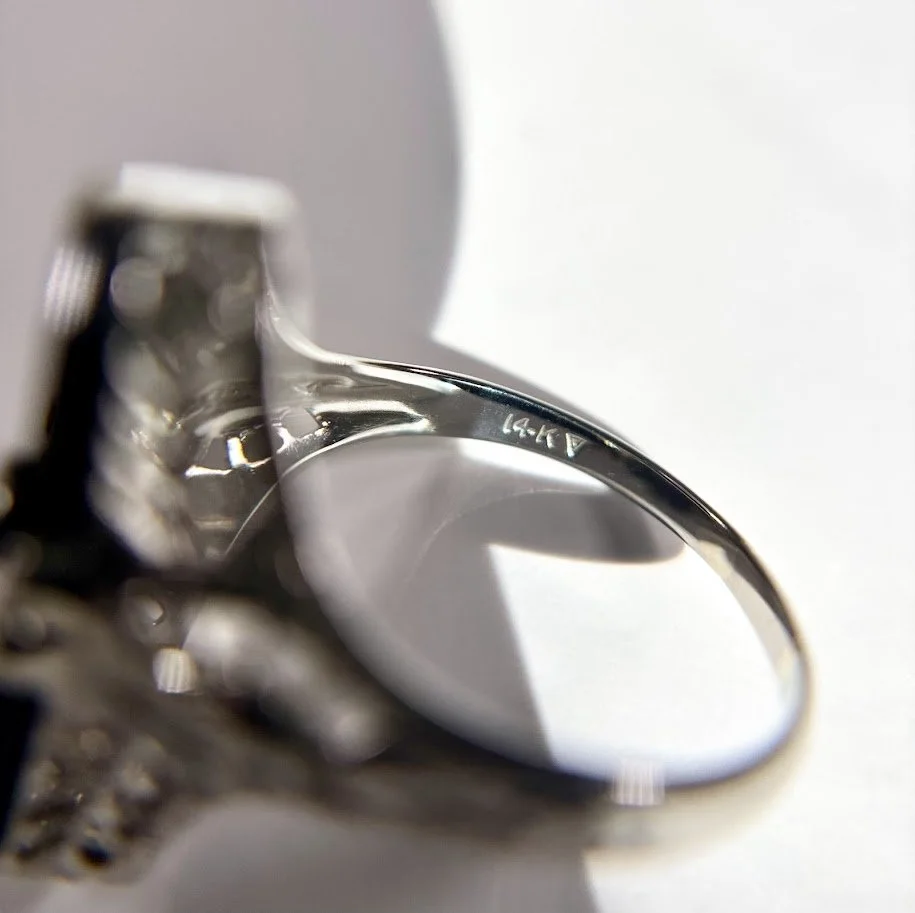 Image 8 of 12
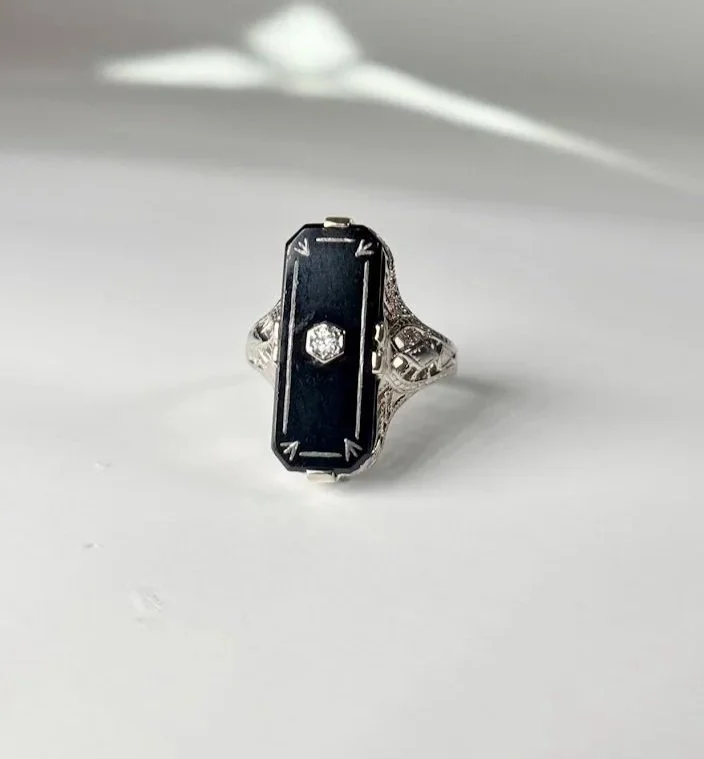 Image 9 of 12
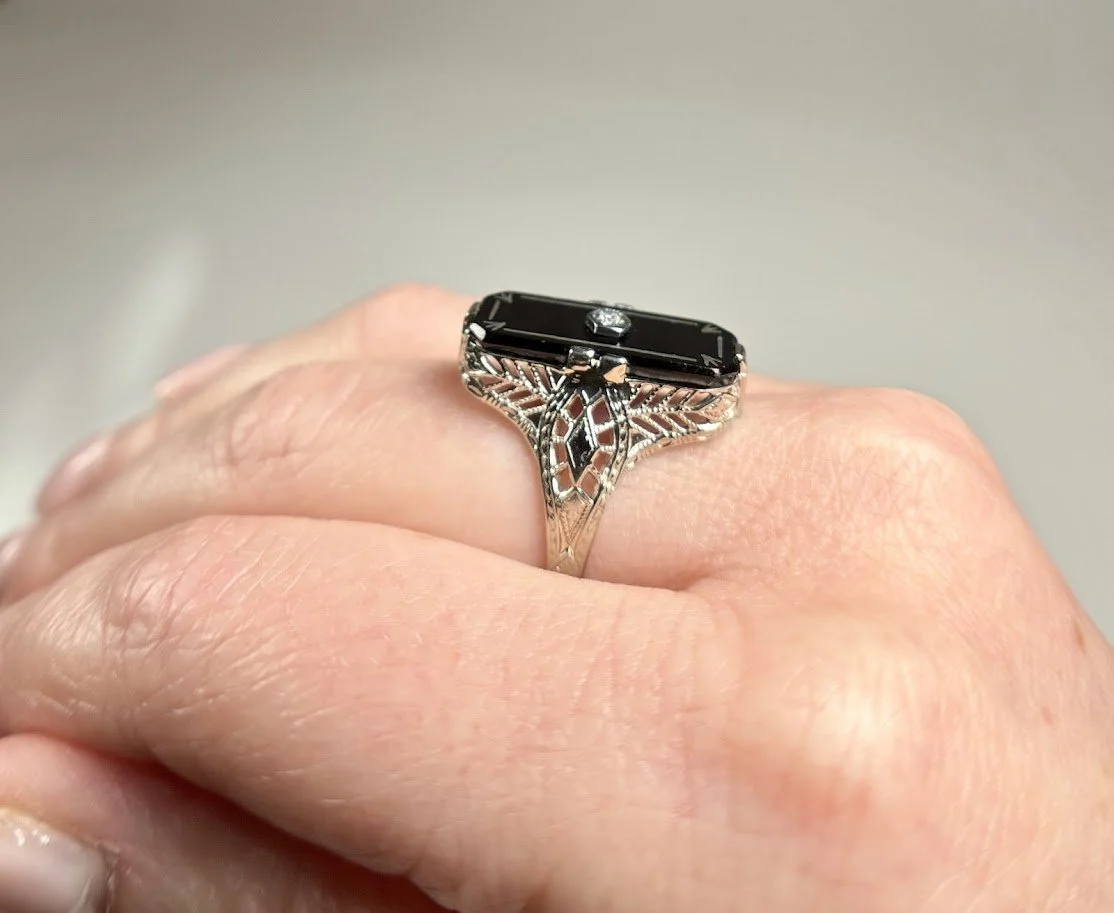 Image 10 of 12
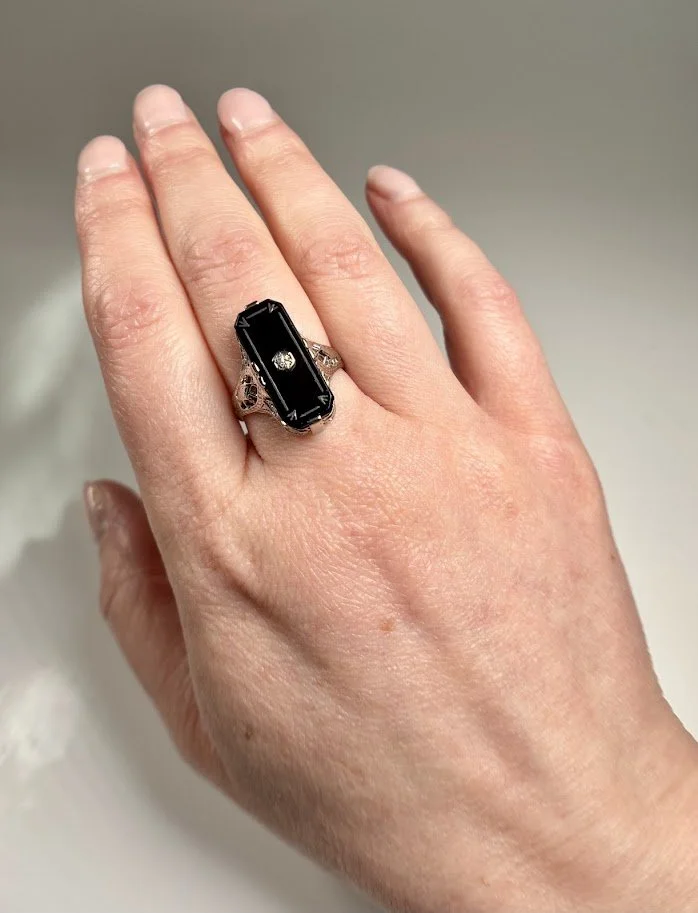 Image 11 of 12
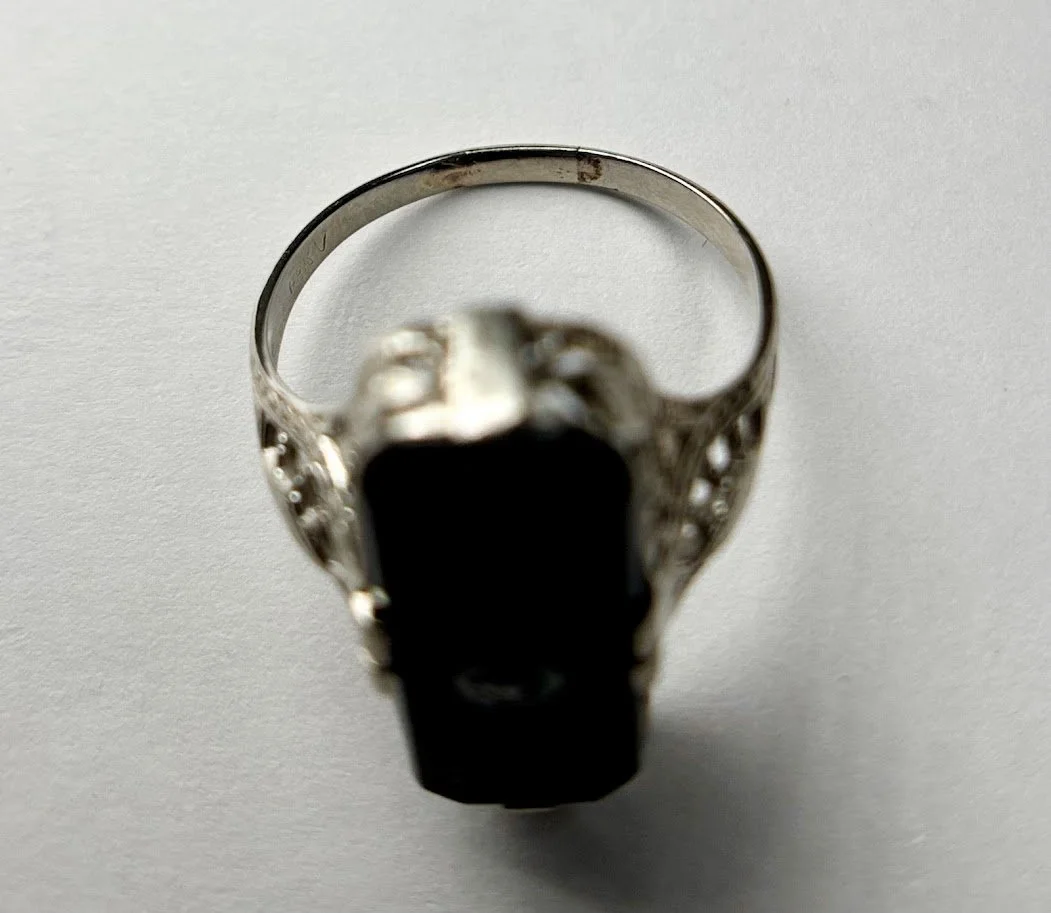 Image 12 of 12